Field Kit · 2024
A form that works with no signal
Offline-first data collection for field researchers. I designed the capture flow and the sync model that keeps a week of remote work from ever being lost.
Field Kit is used by ecologists and aid workers to record observations in places with no connectivity — a rainforest transect, a refugee settlement, a flood zone. If the app loses a day’s entries, someone repeats a day of fieldwork. The stakes make the design constraints unusually clear.
Design principles
- Offline is the default state, not the error state. Nothing in the UI implies something is wrong when there’s no connection. Sync is a status, not an alarm.
- Every input is recoverable. Entries save to local storage on each keystroke. Closing the app mid-form loses nothing.
- Confidence at a glance. A researcher walking between sites needs to know, in one look, that their last three hours are safe.
The sync model
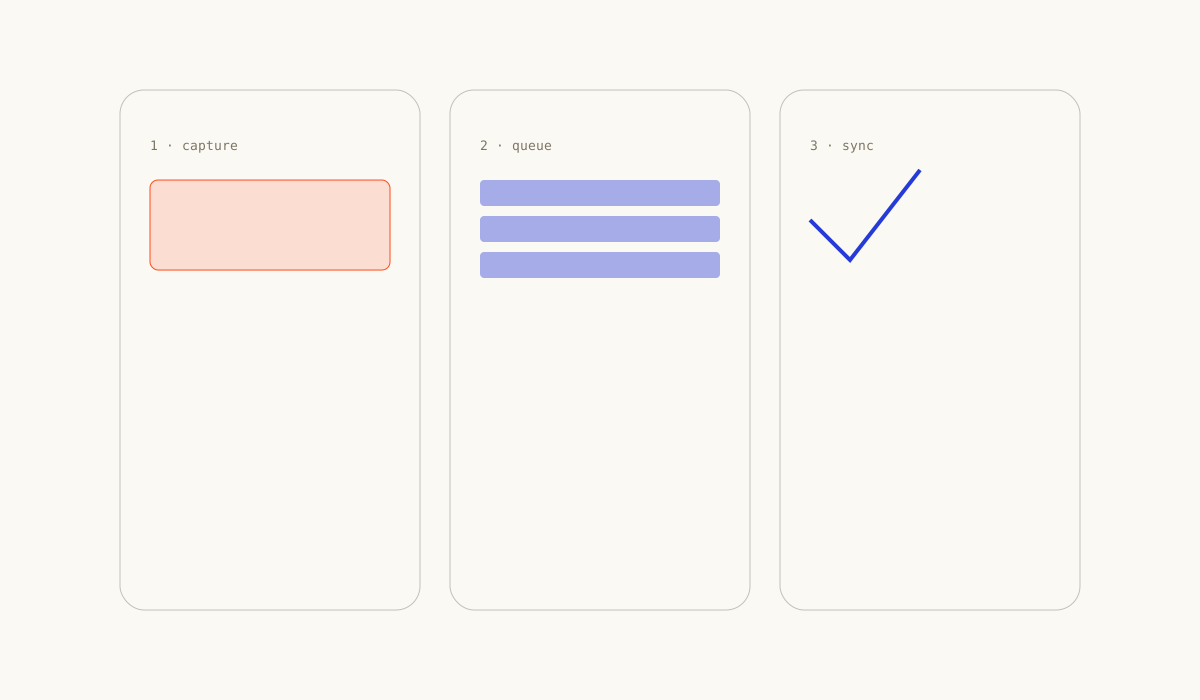
Records move through three states — captured, queued, synced — and the interface shows all three at once as a small stacked meter in the header. When a connection appears, queued records upload oldest-first with a gentle progress fill; each one that lands gets a single tick. No spinners, no blocking dialogs, no “are you sure.”
The motion here is deliberately understated. A researcher glancing at their phone in bright sun should read the state from color and fill level alone — animation is a confirmation for people who are watching, never a requirement.
Outcome
Field Kit shipped to three research organisations. In the first season of use across ~40 field workers, zero reported data-loss incidents. The stacked sync meter became the app’s signature element and now appears on the marketing site.